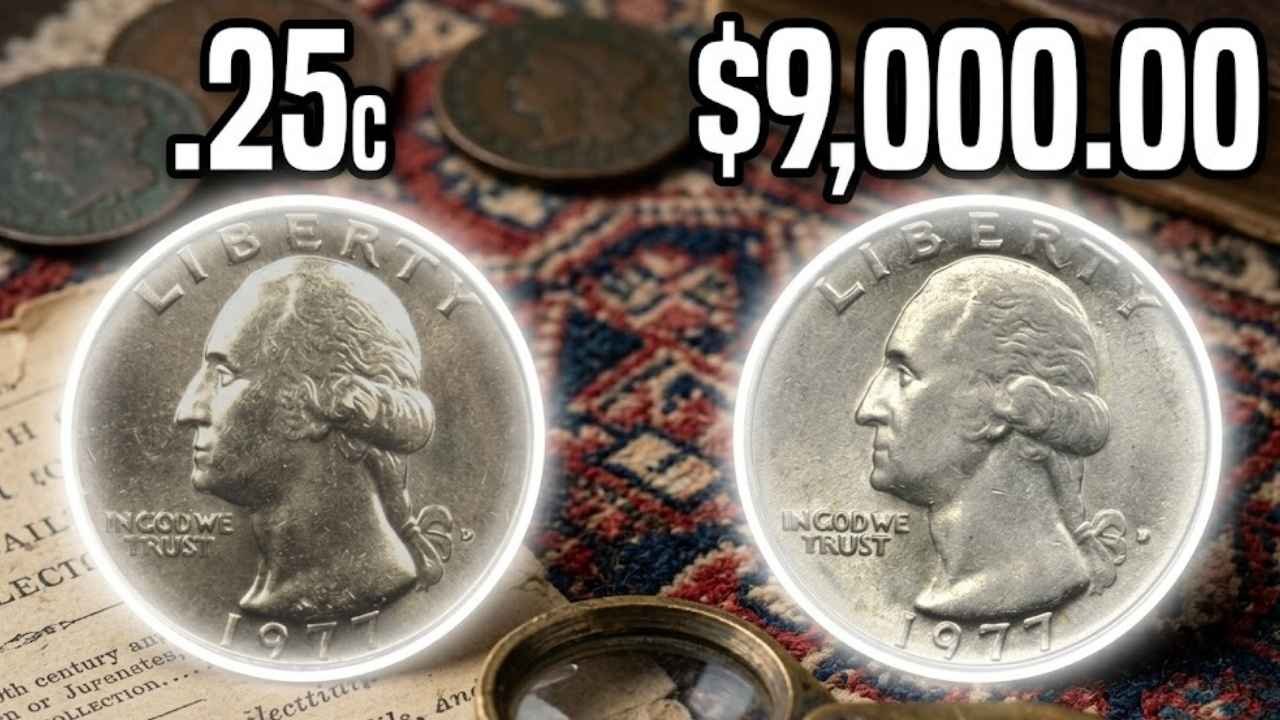
1977 Washington Quarter Value Guide The 1977 Washington Quarter continues to attract attention from coin collectors and hobbyists who are curious about modern coins with hidden potential. Although this quarter was produced in large quantities for everyday circulation, select examples in exceptional condition or with unusual minting errors have gained significant interest in the collector market. Issued during the long-standing Washington quarter series by the United States Mint, the 1977 Quarter can carry collectible value far beyond its face denomination when found in top condition.
1977 Quarter Coin Value Chart by Condition
| Coin Type | Condition | Estimated Value |
|---|---|---|
| 1977 No Mint Mark | Circulated | $0.25 – $0.50 |
| 1977 No Mint Mark | MS63 | $5 – $10 |
| 1977 No Mint Mark | MS65 | $15 – $20 |
| 1977 No Mint Mark | MS67 | $150 – $250+ |
| 1977-D | Circulated | $0.25 – $0.50 |
| 1977-D | MS65 | $10 – $25 |
| 1977 Error Coin | Minor Error | $50 – $150 |
| 1977 Error Coin | Major Error | $200 – $1,000+ |
Millions of these quarters were minted at two primary locations, Philadelphia and Denver. Philadelphia coins do not carry a mint mark, while those produced in Denver display a small D beneath the date. Due to the massive number released into circulation, most examples encountered today are common and worn. However, condition plays a major role in determining collectible value.

Mint Locations and Production Details
The 1977 Quarter was manufactured at two facilities operated by the United States Mint:
- Philadelphia Mint without mint mark
- Denver Mint with D mint mark
Philadelphia produced more than 468 million coins, while Denver struck over 256 million pieces. Because of this high production, circulated examples are typically only worth their face value unless preserved in near-perfect condition.

Design Features and Composition
The 1977 Quarter features the familiar image of George Washington on the obverse side. The reverse showcases a heraldic eagle with wings spread wide, clutching arrows and olive branches.
Important specifications include:
- Composition of copper and nickel clad layers
- Weight of 5.67 grams
- Diameter of 24.3 millimeters
- Absence of silver content
Unlike quarters produced before 1965, this issue does not contain any precious metal, meaning collector demand is largely based on condition or rarity rather than intrinsic metal value.
Rare Errors and Valuable Varieties
While standard circulated examples are easy to find, certain mint errors can dramatically increase value. Collectors often search for doubled die obverse varieties, off-center strikes, clipped planchets, broadstrikes, or visible die cracks.

Minor mint errors may sell for around $50, while dramatic or scarce examples have been known to reach values between $200 and $1,000 or more depending on severity and preservation.
What Makes a 1977 Quarter Valuable
Collectors typically evaluate the following characteristics:
- Sharp strike in Washington’s hair details
- Clear eagle feather definition
- Original mint luster
- Minimal contact marks
- High certified grade such as MS66 or higher
Coins that receive professional grading from organizations like the Professional Coin Grading Service or the Numismatic Guaranty Company are generally more attractive to buyers.
Collector Demand and Market Trends
Interest in modern clad coins has grown steadily over the years, particularly among registry-set collectors who compete for top-graded specimens. While lower-grade coins remain common, examples graded MS67 or higher are much more difficult to locate and continue to see increasing demand.
Storage and Preservation Tips
Maintaining proper storage conditions is essential to protect the coin’s value. Store quarters in protective holders, avoid touching the surfaces directly, and keep them in dry environments away from moisture. Cleaning or polishing should never be attempted, as it can permanently reduce collector interest.
Final Verdict
The 1977 Quarter may appear to be an ordinary piece of change, yet coins preserved in exceptional condition or those displaying rare mint errors can become highly collectible. Although most examples remain worth face value, premium uncirculated pieces and verified error varieties represent the rare finds that many collectors actively seek.
Disclaimer
Values mentioned in this 1977 Quarter Coin Value Guide are approximate and based on recent collector demand and market trends. Actual prices may vary depending on condition, rarity, certification, and auction results. Professional evaluation is recommended before making any buying or selling decisions.